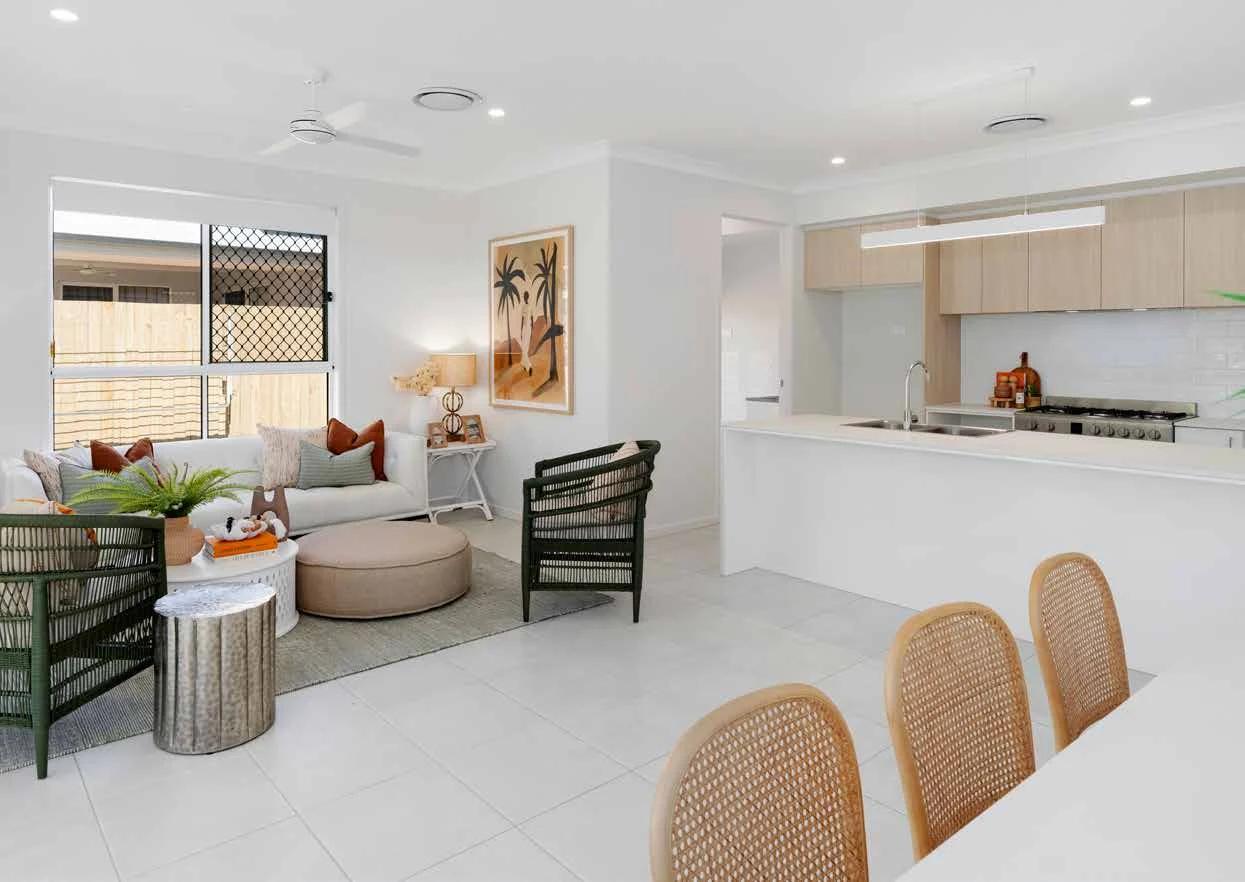
Designer interior open-plan living and premium finishes
The Quantity Surveyor Analysis: Why a Tax Depreciation Schedule Pays for Itself
For residential property investors, minimising tax liability legally while maximising rental cash flow is central to building long-term wealth. Yet thousands of Australian property owners leave thousands of dollars unclaimed each year by failing to commission a professional tax depreciation schedule. Under Australian Taxation Office (ATO) regulations, only qualified Quantity Surveyors are recognised as possessing the statutory qualifications to estimate construction costs where historical figures are unavailable.
What Does a Quantity Surveyor Do?
A Quantity Surveyor (QS) is an accredited construction cost expert certified by the Australian Institute of Quantity Surveyors (AIQS). For investment properties, a QS conducts an exhaustive analysis of the asset, producing a comprehensive, 40-year Tax Depreciation Schedule tailored to ATO compliance requirements.
Their report itemizes:
- The original historical construction cost of the building structure (Division 43 Capital Works).
- All individual plant, equipment, and removable fixtures (Division 40), assessing their individual values and effective lifespans.
- The investor's proportional entitlement to common property assets in strata titled developments (lifts, pools, foyers, fire systems).
- Projections comparing both Diminishing Value and Prime Cost calculation methodologies.
Cost vs Benefit Analysis: First-Year Returns
A comprehensive, ATO-compliant residential depreciation schedule typically costs between $600 and $900. Crucially, under Section 25-5 of the Income Tax Assessment Act 1997, the cost of the quantity surveyor report itself is 100% tax deductible as an expense incurred in managing your tax affairs.
Consider the typical return on investment for a new Gold Coast apartment:
- Report Cost: Approximately $750 (tax deductible).
- Year 1 Depreciation Deductions: Typically between $10,000 and $18,000 on a brand-new prestige apartment.
- Tax Saving (37% marginal tax rate): An immediate cash flow tax benefit of $3,700 to $6,660 back in your pocket in the very first year.
The report delivers an immediate five-to-ten-fold return on capital in Year 1 alone, remaining valid for up to 40 years of continuous ownership.
Off-the-Plan Advantage: Effortless Contractor Data Access
When purchasing an off-the-plan residence directly through developers, quantity surveyors gain direct access to actual contractual building figures, architectural specifications, and unexpended asset allowances. This ensures every dollar of eligible capital investment is accurately captured from the moment of settlement. Explore Surfers Paradise residences or explore Broadbeach residences to examine indicative schedule yields.
Timing: When Should You Commission the Report?
The optimal time to engage a quantity surveyor is immediately upon property settlement, prior to tenant occupancy or as soon as the property is placed on the rental market. Calculate your net borrowing structures and holding cash flows using BARTA Property finance tools.
Frequently Asked Questions
Is the cost of a quantity surveyor report tax deductible?
Yes. Under Section 25-5 of the Income Tax Assessment Act 1997, the entire fee paid to a quantity surveyor for a tax depreciation schedule is 100% tax deductible in the year it is incurred.
Can an accountant prepare my property depreciation schedule?
No. The ATO explicitly mandates that only accredited quantity surveyors have the legal qualifications to estimate construction costs for depreciation purposes where actual figures are unknown.
How long is a quantity surveyor report valid for?
A professionally prepared tax depreciation report covers the entire 40-year statutory depreciation period, providing your accountant with annual deduction schedules for every year of ownership.
How much does a residential depreciation report typically cost?
A comprehensive residential report generally costs between $600 and $900 depending on property size and strata complexity, and can be claimed back on your tax return.
Do I need a quantity surveyor for a second-hand property?
Yes. While 2017 rules restricted plant and equipment deductions on second-hand properties, Division 43 capital works deductions remain fully claimable on buildings constructed after 1987, requiring a QS estimate.

Jayden Barta
BARTA Property • Gold Coast & Brisbane
Specialising in prestige developments, off-the-plan apartments, and residential projects across South East Queensland.


